
Socrates believed that democracy risked placing power in the hands of those lacking wisdom, leading to decisions driven more by emotion than reason. Plato, his student, warned that democracy could easily descend into mob rule and ultimately tyranny, favoring a “philosopher-king” model where the wise would govern. Aristotle, while less dismissive, argued that democracy might enable rule by the majority, prioritizing self-interest over the common good. Hobbes questioned democracy’s capacity to maintain order, fearing it encouraged chaos and conflict in the absence of a strong central authority. Nietzsche went further, criticizing democracy for promoting mediocrity and suppressing individual greatness, which he felt hindered human potential by fostering a “herd mentality.” Each philosopher, in their own way, worried that democracy could undermine stability, wisdom, or excellence in governance.
These age-old critiques are reflected in modern democratic practices. The recent American election and the success of Donald J. Trump illustrate how democracy can be influenced by powerful financial backers. Tesla CEO Elon Musk contributed over $118 million to Trump’s campaign and used his social media platform to shape political discourse. Similarly, Jewish billionaire Miriam Adelson donated $100 million, reportedly advocating for policies such as West Bank annexation to Israel. These examples highlight how wealthy donors can sway democratic processes, raising concerns about representation and the impact of private interests on governance.
When we examine human development in underdeveloped and many developing countries, these philosophers’ critiques of democracy often resonate. A stable democracy requires an informed citizenry, robust institutions, a resilient economy, and transparent communication channels. However, global inequality presents significant challenges: the poorest 50% of the world’s population—approximately 4 billion people, primarily in regions like Sub-Saharan Africa, South Asia, Southeast Asia, and Latin America—hold less than 2% of global wealth. Meanwhile, the wealthiest 1.1% control 45.8%, and the top 10% own 76%. Additionally, 8.5% of the world’s population lives in extreme poverty, surviving on less than $2.15 per day.
Interestingly, when we consider the top 20 countries by Human Development Index (HDI), 15 are constitutional monarchies. This suggests that these nations may have benefitted from structural frameworks established during monarchical periods, which later transitioned into stable democratic systems.
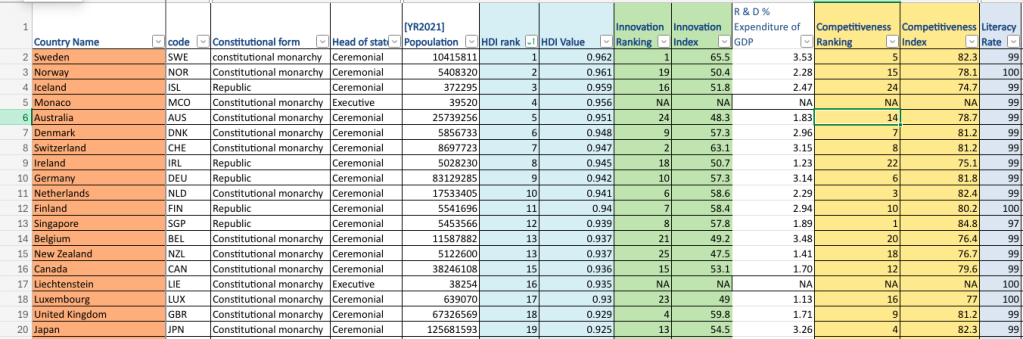
In contrast, among the lowest HDI countries, most are republics, with some relying on provisional governance.
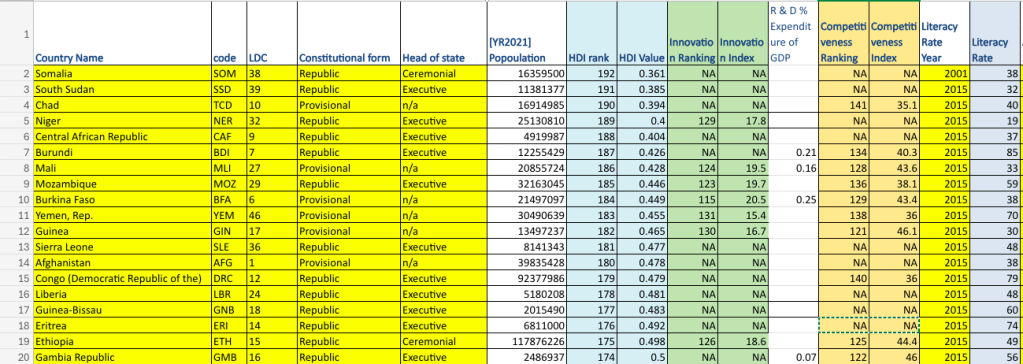
In many developing nations, democratic systems face even greater challenges. Following elections, it’s common for members of parliament to be “bought” to form coalitions, compromising the integrity of governance. Corruption is often pervasive, driving policies that favor sponsors and donors over the public good.
A key pillar sustaining a strong democracy is freedom of speech. Ironically, the United States stands out as the only country with a unique constitutional commitment to this right—so long as speech does not incite imminent violence or illegal acts. While many democratic nations support freedom of expression, it often comes with terms and conditions that can serve the interests of the ruling party.
It’s remarkable that, despite advancements across science, technology, and society, discussions on governance remain limited and, at times, overly constrained. Democracy is frequently held up as the ultimate model, yet questioning its limitations or exploring alternative systems is often considered taboo. This narrow view can become a form of intellectual prejudice. Just as scientific inquiry thrives on openness, skepticism, and continuous testing, governance models should also undergo critical examination.
Governance, like any other field, must evolve by integrating insights from history, culture, philosophy, and geopolitical realities. The Situational Leadership Model suggests that leadership should adapt to the maturity and readiness of those it serves. Similarly, governance frameworks should be tailored to the development level and readiness of citizens, particularly in underdeveloped countries where foundational structures may be weak.
Imposing democracy on nations unprepared for its demands can be more destabilizing than beneficial. Democracy, for all its virtues, requires strong foundations to thrive; without these, it risks devolving into corruption, instability, or even societal collapse.
 faznotes.com
Leave a comment