
The Middle East has long been shaped by historical conflicts, religious significance, and geopolitical struggles, with Israel playing a central role in many of these dynamics. For decades, Israel projected an image of military superiority and moral authority, bolstered by its successful campaigns against neighboring Arab states. However, three significant developments are reshaping Israel’s global position: the loss of its perceived invincibility, the diminishing victimhood narrative tied to the Holocaust, and a significant blow to its international reputation.
Loss of Perceived Invincibility
Israel has long been recognized as a formidable military power in the Middle East, ranking 17th globally in military strength according to Global Firepower in 2024. In past conflicts, Israel demonstrated swift and decisive military victories—most notably during the Six-Day War of 1967, when it launched a preemptive strike and defeated Egypt, Jordan, and Syria in just six days, securing the West Bank, Gaza Strip, Sinai Peninsula, and Golan Heights. The Yom Kippur War of 1973, motivated by Egypt and Syria’s desire to reclaim territories lost in 1967, saw Israel reverse initial setbacks and regain ground in just 20 days.
However, recent conflicts with Hamas in Palestine and Hezbollah in Lebanon have significantly challenged this perception. Despite extensive military efforts, Israel has faced prolonged resistance from these groups, which have demonstrated resilience on the ground.
On November 27, 2024, a ceasefire agreement between Israel and Hezbollah took effect after nearly 14 months of intense conflict. Brokered by the United States and France, the truce required Israel to withdraw from southern Lebanon, while Hezbollah agreed to pull back north of the Litani River.
In Gaza, Israeli Prime Minister Benjamin Netanyahu outlined three main objectives in the conflict with Hamas: the destruction of Hamas, the safe return of hostages, and ensuring Gaza no longer poses a threat by preventing Hamas from reestablishing its military capabilities. However, after a year of conflict since October 7, 2023, Israel has not achieved these goals. Hamas remains resilient, hostages have not been recovered, and Israel has struggled to take control of Gaza, a territory just 41 kilometers long and 6-12 kilometers wide.
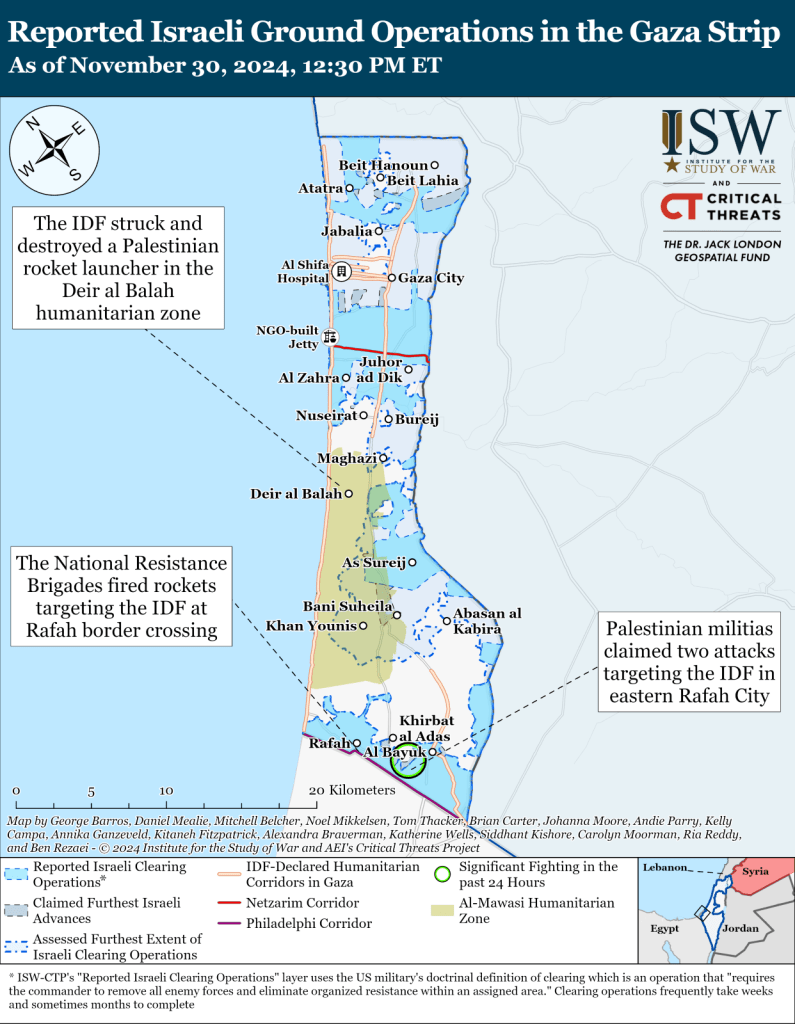
Furthermore, during the October 2024 escalation, Iran’s direct confrontation with Israel revealed significant vulnerabilities. The volume and speed of Iranian missiles overwhelmed Israel’s air defense systems, penetrating its famed Iron Dome and other defensive layers, which had been a cornerstone of Israel’s deterrence doctrine.
Diminishing Holocaust-Based Victimhood Narrative
The victim narrative of the Holocaust, which has long shaped global sympathy toward Israel, is eroding. Increasingly, the international community views the actions of Zionism as comparable to those of the Nazis. Russian Foreign Minister Sergei Lavrov bluntly stated that Israel should stop using the Holocaust as an alibi to justify the ongoing violence in Gaza. Lavrov also noted that 26 million Russians sacrificed their lives to defeat the Nazis, highlighting what he described as the misuse of Holocaust history. Such statements reflect a growing sentiment that Israel’s invocation of historical suffering is losing its persuasive power.
Decline in International Reputation
Israel’s international standing has suffered considerably due to allegations of war crimes. The International Criminal Court (ICC) has issued arrest warrants for Israel’s prime minister and defense minister, accusing them of war crimes—a significant blow to the country’s reputation. Additionally, 146 countries have recognized Palestinian statehood, and 143 countries voted in favor of a May 10, 2024, UN General Assembly resolution that upgraded Palestine’s rights as an observer state and urged the Security Council to favorably consider its full membership. These developments indicate a growing shift in global opinion. Israel’s actions are increasingly seen as inconsistent with international norms, leading to a significant loss of its moral authority.
Conclusion
The Oslo Accords, signed in the 1990s, represented a landmark effort for peace between Israel and the PLO, aiming for a two-state solution and establishing limited Palestinian self-governance. However, the peace process faced fierce opposition within Israel, culminating in the assassination of Prime Minister Yitzhak Rabin on November 4, 1995, by a right-wing extremist opposed to the accords. Rabin’s death significantly weakened the momentum for peace, and in the wake of his death, the Likud Party, led by Benjamin Netanyahu, rose to power in the 1996 elections. Under Netanyahu’s leadership, the peace process largely stalled, deepening divisions further. Recently, Jordan’s Foreign Minister Ayman Safadi criticized Israel for lacking a clear “end game” in its strategy, accusing the country of pursuing perpetual conflict rather than seeking a resolution. His comments were a direct response to Israeli Prime Minister Benjamin Netanyahu’s assertion that “we are surrounded by enemies.”
Speaking on behalf of 57 Muslim-Arab countries, Safadi stated, “We are here, members of the Muslim-Arab committee, mandated by 57 countries. I can tell you unequivocally that all of us are willing, right now, to guarantee Israel’s security, provided that Israel ends the occupation and allows for the emergence of an independent Palestinian state.”
Today, the challenges facing Israel are no longer confined to military threats but extend to issues of legitimacy and moral authority on the world stage.
Learn more about the Middle East conflict: https://a.co/d/gPfqOQJ
 faznotes.com
Leave a comment