
Looking back, this year began not with fireworks, as usual, but with a golden sunrise at Annapurna Base Camp, 4,130 meters above sea level in Nepal. After three strenuous days of trekking, reaching the base camp felt like a quiet achievement, especially with minimal acclimatization. There is a saying: to truly know yourself, climb a mountain—it reveals both your physical and mental resilience.
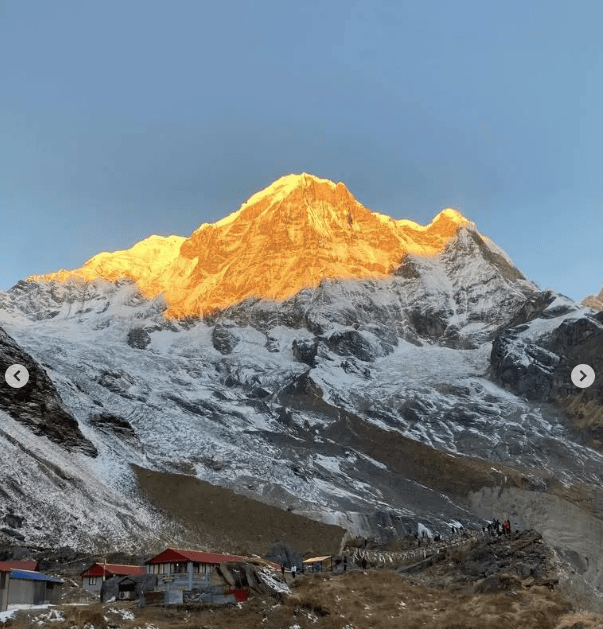
After spending New Year’s Day at the base camp, I descended slowly, taking four to five relaxed days to enjoy the mountain villages, followed by a few leisurely days in Pokhara. On the return journey, I reunited in Kathmandu with the family who had hosted me during an unexpected three-month COVID lockdown—from April to June 2020—following my month-long Mount Everest Base Camp trek via the Tenzing-Hillary Route. That reunion carried a sense of closure, even though the child, now grown, still occasionally calls me to play PUBG with him.
From Kathmandu, I traveled to India, spending time with family and development teams after several years, and exploring the hill regions. I then flew to Saudi Arabia after obtaining a Chinese business visa, visiting major cities including Jeddah, Mecca, Medina, Riyadh, and Dammam.
Contrary to the image often projected by the media, I found myself questioning where decades of oil wealth had gone, given that oil has been extracted for over a century. In many areas, it felt more like traveling through an underdeveloped country, with only some pockets of posh infrastructure. Many people make the mistake of visiting a few areas on a tight two-day schedule and then projecting the entire country as either highly prosperous or poor based on such brief trips. It reminded me of something the Indian government sometimes does: shielding the sides of main highways during foreign delegations to hide backwardness.
It may surprise many that women were first allowed to drive in Saudi Arabia only in June 2018. Under the current leadership’s Vision 2030, there is clear potential for meaningful transformation. Despite my initial impressions, change is undeniably in the air, experiencing remarkable respect and hospitality from local Arabs, leaving a strong positive impression. This human dimension reminded me of a core idea from Why Nations Fail by Daron Acemoglu and James A. Robinson: long-term prosperity is driven by inclusive institutions, not merely by geography or culture.
In the first week of April, I returned to Dubai for approximately two and a half months, engaging with key clients and attending meetings with the Ministry of Health regarding the onboarding of healthcare facilities. Much of my free time was spent on the beaches and continuing my kite-surfing sessions. Around mid-June, I departed for China via Mumbai and Colombo, Sri Lanka. The original plan was to fly to Kazakhstan and begin from the eastern regions of China, including Tibet, traveling all the way to Beijing; however, due to the Israel–Iran conflict, flights were cancelled and the itinerary had to be rerouted instantly.
I arrived in Guangzhou, China, via Colombo, spending some time with vendors, extended my visit to Shenzhen, and then flew via Shanghai to Beijing. There, I finally checked off a long-held item from my mid-term list: climbing the Great Wall on my birthday. I then continued to Hong Kong, followed by Manila and El Nido in Palawan, the Philippines. The archipelago was one of the most breathtaking places I have ever visited, rivaling even the Phi Phi Islands near Phuket.
After a week in El Nido, Palawan, I flew to Vietnam for the second time. This time, I spent a month traveling along Vietnam’s coast, from Saigon to Nha Trang, Hoi An, and Da Nang, before heading to Thailand. There, I finally ticked off a major mid-term goal: two weeks of intensive Muay Thai training in Chiang Mai—a goal I had set since my first visit to Thailand over a decade ago. Afterward, I flew to Surat Thani, took a ferry to Koh Samui, and then onward to Koh Tao, where I earned a PADI Open Water certification, building on my initial scuba experience from 2010. I concluded this leg of the journey with a few days in Bangkok.
From Thailand, I returned via India, where I miraculously met an AI developer while I was actively looking for an experienced tech lead to work with my team, all while staying at an estate in kerala. We agreed to collaborate on the development of a RAG-based AI platform for enterprises. We spent a few days together hiking the estates, and I then traveled to Qatar on the way to Dubai.
Back in Dubai—one of the fastest-paced cities I have ever lived in and traveled to, after visiting over forty-five countries and more than two hundred cities—I am often asked by friends how I reconcile this pace with being a nature lover. The answer is : Dubai has one of the best urban coastlines, where you can relax on the beach at any time, enjoy a deep-water swim, or play golf at courses with tee times available almost any time of day. The city also offers an endless array of beachfront cafés, restaurants, and global cuisines to explore. Despite living here for two years, I still have many places left to tick off my list. Dubai’s dynamism extends beyond lifestyle—business opportunities never truly pause because of it.
Time slips by in Dubai almost imperceptibly. Months vanish in the blink of an eye. Even with considerable flexibility in my schedule, I still find myself asking why the city feels so relentlessly fast—a question that deserves an article of its own to explore fully.
Books read:
Anyway, this year I managed to read nine books—some fully and some partially—which is not bad compared to the previous year.
- The Vision: Reflections on the Way of the Soul – Kahlil Gibran: Poetic meditations on love, suffering, freedom, and spiritual awakening.
- The Compound Effect – Darren Hardy: How small, consistent habits compound into extraordinary results.
- Why Nations Fail – Daron Acemoglu & James A. Robinson (Partially read): Why inclusive institutions, not geography or culture, drive long-term prosperity.
- Invention and Innovation – Vaclav Smil: A grounded examination of technological progress through incremental change.
- The Power – Robert Greene: A strategic exploration of power dynamics across history.
- The Way of Zen – Alan Watts: An accessible introduction to Zen philosophy and mindfulness.
- Poor Economics – Abhijit V. Banerjee & Esther Duflo: Data-driven insights into poverty and effective policies.
- Think on These Things – Jiddu Krishnamurti: Reflections on conditioning, authority, and inner freedom.
- The One Thing – Gary Keller & Jay Papasan (Currently reading): A productivity philosophy centered on focus and prioritization.
Countries Visited :
During this year,Visited 11 countries:
- Nepal: Annapurna Base Camp, Pokhara, Kathmandu
- India: Mumbai, Kerala
- Saudi Arabia: Jeddah, Mecca, Medina, Riyadh, Dammam
- UAE
- Sri Lanka: Colombo (transit)
- China: Guangzhou, Shenzhen, Beijing
- Hong Kong
- Philippines: Manila, El Nido (Palawan)
- Vietnam: Saigon, Nha Trang, Da Nang, Hoi An
- Thailand: Bangkok, Chiang Mai, Koh Samui, Koh Tao
- Qatar
Articles Written:
Moreover managed to write around 29 articles on my personal blog faznotes.com
- Resilience and Dignity: The Essence of Humanity and Nations (Jan 18, 2025)
- Understanding AI Assistants, RAG and AI Agents (Jan 24, 2025)
- The rise of data colonies and the threat of a unipolar world in the age of AI (Jan 25, 2025)
- The AI ‘Sputnik Moment’: Key takeaways from the DeepSeek-R1 research paper (Jan 29, 2025)
- Mixture of Experts (MoE): Improving AI’s Efficiency (Feb 7, 2025)
- When the Palace Becomes a Circus: The Decline of Western Leadership (Feb 8, 2025)
- Vector Embeddings and RAG: Unlocking the Power of AI (Feb 12, 2025)
- How Oppression Distorts the Legacy of Resistance (Feb 19, 2025)
- Tragedy of Ukrainians: A Proxy War Gone Wrong (Mar 1, 2025)
- Leadership: From Theory to Application (Mar 4, 2025)
- The Human Mind: A feather in the wind (Mar 16, 2025)
- The Persian Trap (Apr 9, 2025)
- Geopolitical Shifts: U.S. Policy Pivot from Ukraine to the Middle East (Apr 18, 2025)
- Five Idiots of South Asia (May 1, 2025)
- From Guangzhou to Beijing — An Economic Miracle (Jun 30, 2025)
- In Pursuit of Happiness: Materialism vs. Romanticism (Jul 4, 2025)
- Vietnam and Gaza: A Shared Spirit of Resistance (Jul 17, 2025)
- In the End, We Are Our Choices: The Jeff Bezos Blueprint (Aug 5, 2025)
- An Asian Summer Odyssey: Realities and Stereotypes (Aug 17, 2025)
- From the Brook of Egypt to the Euphrates (Aug 19, 2025)
- GPTs and the Myth of the All-Knowing Oracle (Aug 30, 2025)
- The Staggering Scale of Global Inequality (Sep 13, 2025)
- Market Push vs. Market Pull: When Innovation Solves Non-existent Problems (Sep 25, 2025)
- RAG vs. CAG: A Hybrid Approach (Sep 30, 2025)
- The Curious Case of Palestinian Statehood: The Missed Train (Oct 4, 2025)
- Samsung’s Tiny Recursive Model (TRM) Redefines AI Reasoning (Oct 10, 2025)
- Donald Trump’s End Game in Gaza: Impulsive Gambit or Calculated Strategy? (Oct 21, 2025)
- Beyond Perceptions and Reactions (Dec 6, 2025)
- Goal Setting and the Purposeful Life (Dec 18, 2025)
Professional Achievements:
This year marked significant progress for our healthcare product, DigiSuite EMR, now recognized as one of the premium EMR systems in the UAE—fully compliant with Ministry of Health requirements without relying on third-party integrations, and selected by the Fujairah Royal Palace through a tender for their in-house clinic management.
- Unified Insurance Module: Developed an integrated insurance module within the EMR, enabling seamless real-time claims processing across UAE authorities—Shafafiya (DOH), eClaimLink (DHA), and Riayati (MOHAP)—consolidating all three systems into a single platform.
- Riayati HIE Integration: Connects pharmacies to the National Health Information Exchange, providing real-time access to allergies, medications, and laboratory data, along with prescription validation and automated compliance reporting—for safer care and faster reimbursements.
- iBlocs (Soft Launch): A blockchain-based e-invoicing SaaS platform, compliant with ZATCA Phase 2 (Saudi Arabia) and aligned with upcoming UAE e-invoicing requirements, featuring end-to-end audit trails and NFT-based document integrity. Developed in partnership with Trackgensis LTD, UK.
- PangeaMind: An enterprise-grade, RAG-based AI platform for businesses, enabling secure data retrieval and compliance-ready intelligence across enterprise systems.
Personal Projects
Two side projects were developed and released this year:
- BisSuite AI: An AI-powered strategy development suite delivering actionable insights for entrepreneurs and growth teams.
- CrowdSOS: A location-based social platform connecting donors directly with individuals in need, NGOs for organized collections, and volunteers for community initiatives.
Both applications, along with a few other systems, were impacted by a major ransomware attack a few weeks ago, requiring a complete server wipe and restoration from backups. While some user data was unfortunately lost, the incident led to a significant reinforcement of our security architecture, and all platforms are now fully operational.
Looking Ahead:
A new country awaits this New Year, along with many mid-term and short-term goals yet to be ticked off.
One may ask why I recount all this. The truth is quite the opposite. Despite a year filled with travel, learning, and achievement, I still feel I wasted nearly half of my time and could have been far more productive. The only way forward is to keep reflecting and improving.
 faznotes.com
Leave a comment