
“Tactics without strategy is the noise before defeat. Strategy without tactics is the slowest route to victory.” — Sun Tzu, The Art of War
Israel knows what it is doing — waging a war of elimination that is methodical and brutal in its clarity of purpose. Iran knows what it is doing — waging a war of exhaustion, bleeding its opponent economically, psychologically, and politically until the cost of staying exceeds whatever Washington originally came to the Gulf to defend.
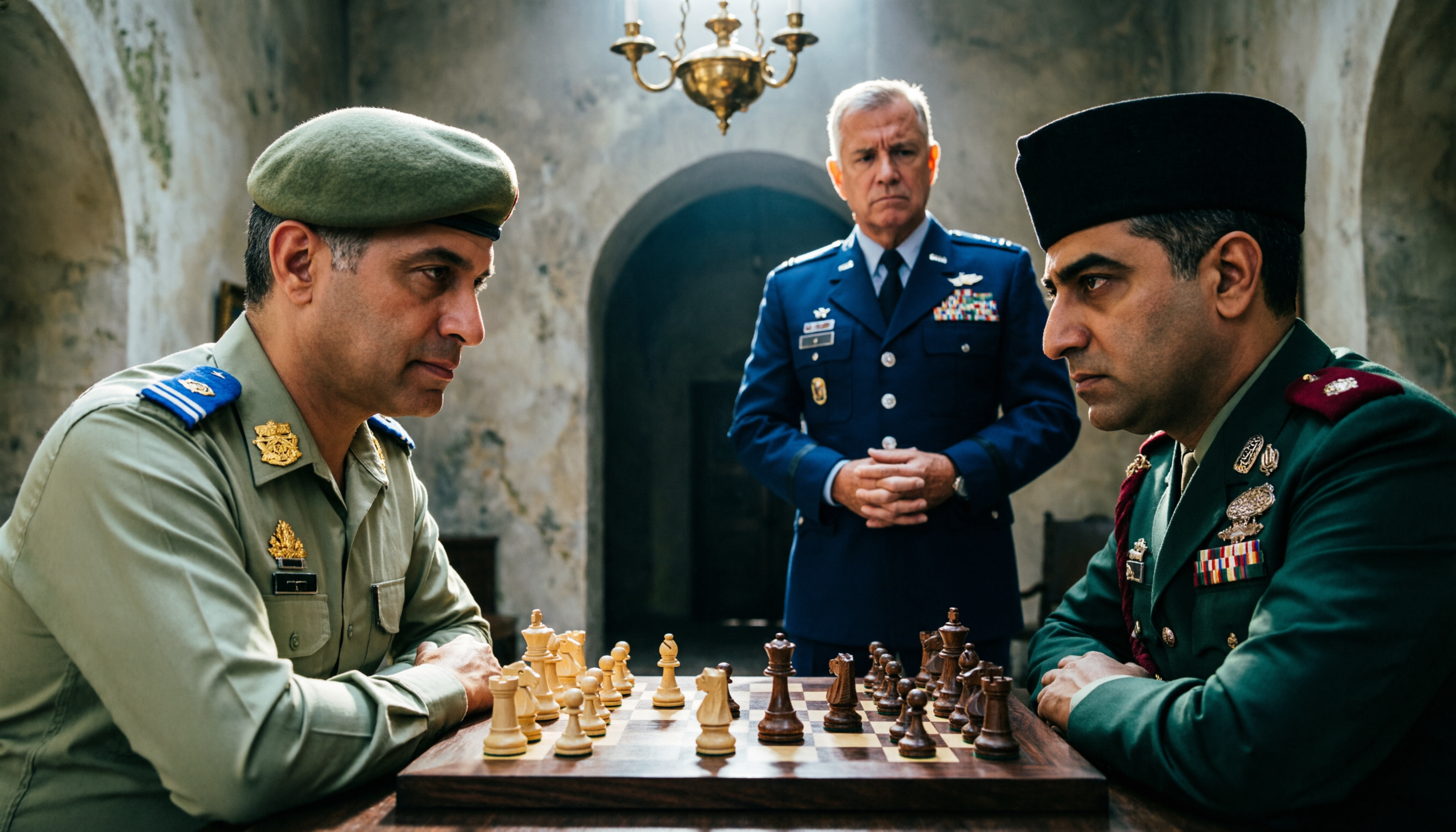
Both sides, whatever one thinks of their methods, possess the one quality that determines the outcome of prolonged conflict above all others: strategic coherence.
America possesses none of it !
Washington has firepower without purpose, presence without direction, and allies without a shared understanding of what victory means — or what the morning after it looks like. It cannot decide whether it wants regime change or a nuclear deal, Iranian containment or Iranian collapse, Gulf stability or Gulf transformation. It wants all of these simultaneously — which means, in practice, it is pursuing none of them coherently.
What is perhaps most alarming is that American intellectuals, military and political analysts are themselves beginning to recognise the rot — not from the outside, but from within America.
The recent dismissal of Army Chief of Staff General Randy George and several other senior generals by Defense Secretary Pete Hegseth, in the middle of an active war in the Persian Gulf, is not merely an administrative reshuffle. It is a visible fracture.
And an American president whose public conduct has descended into routine vulgarity — mocking foreign leaders, demeaning the people of other nations, commenting bluntly about the French president’s wife, and telling the ruler of the Kingdom of Saudi Arabia, one of America’s most critical regional partners, to “kiss my ass” — is not merely an embarrassment. He is a strategic liability and a moral collapse.
Why the Gulf Must Play the Long Game
At this moment, the least that Gulf countries can do is demonstrate strategic patience — the same strategy Iran employed over the last two decades without imploding. This is not passivity, nor cowardice. It is wisdom.
No voice has captured this better than Qatar’s Foreign Ministry spokesperson, Majed Al-Ansari, whose words reflect a rare and important clarity:
“Iran has been here for millennia, and the people of this region have also lived here for millennia — nobody is going anywhere. Total annihilation is not an option, and no people or country will disappear from existence by the wish or whim of any political actor. We will continue to live next to each other as neighbours for the future of humankind, and we must find ways to coexist. This is a very difficult moment, but we will find a way past it.” — Majed Al-Ansari, Spokesperson, Qatar Ministry of Foreign Affairs
There is a deliberate attempt by Zionist forces to drag the Gulf countries into a fight against Iran — one that would be a phenomenal disaster, considering the proximity to Iran and also the very strength and vulnerability of Gulf countries: their enormous expatriate populations.
Why Russia and China Cannot Let Iran Fall
Russia and China cannot afford Iran’s collapse because it directly threatens their strategic, economic, and security interests. For Russia, Iran is a crucial military and economic partner — its drone technology played a key role in sustaining Russia during the Ukraine war, and as an economic cushion via sanctions-era trade. Moreover, last year both countries signed a defence cooperation agreement, revealed by Russia’s own Foreign Minister, confirming that Moscow is actively supporting Iran during this war.
For China, Iran is a vital energy supplier — accounting for more than 12 percent of Chinese oil imports — and a cornerstone of its long-term geopolitical strategy: a 25-year partnership tied to the Belt and Road framework. In a world of growing tension with the United States, a fallen Iran would disrupt China’s energy security, making Iran’s stability a shared strategic necessity.
Why Empires Fall: The Mistake America Keeps Making
There is a particular kind of military disaster that arrives slowly — through economic toll, public and military exhaustion, and the tragic realisation that no amount of firepower can resolve a conflict rooted in ideology and will.
To understand how Iran fights, you must understand Vietnam — not the Hollywood version, but the strategic reality. Between 1965 and 1975, the United States dropped more bombs on Vietnam than were dropped by all sides combined during the entirety of World War Two. It deployed over 500,000 troops at peak strength and had complete air dominance, helicopter mobility unprecedented in warfare, napalm, Agent Orange, and B-52 Arc Light strikes that turned entire forest systems into craters.
North Vietnam had rifles, tunnels, bicycles, and an ideology.
Vietnamese General Vo Nguyen Giap understood something Washington has never fully internalised: in a guerrilla war against a democratic superpower, you do not need to achieve military victory. You need to make the political cost of continuing the war unbearable at home. You need to outlast the enemy’s will, not destroy their army. Giap said it explicitly: if the Americans kill ten Vietnamese for every one American killed, America will still lose — because America will run out of political will before Vietnam runs out of fighters. He was correct.
During the Vietnam War, the United States suffered over 200,000 casualties (killed and wounded)—a level of loss that, combined with domestic pressure, ultimately eroded the will to continue the war.
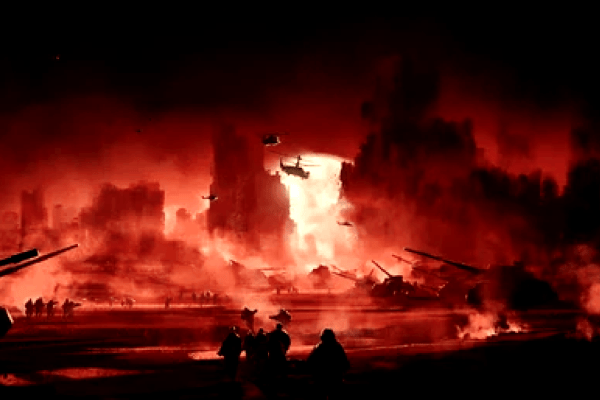
The lesson is now unravelling again in the Persian Gulf. And it is a lesson written across every empire that ever confused tactical dominance with strategic victory.

Conclusion
The Persian Gulf today is not merely a theatre of military confrontation — it is a mirror held up to the nature of power itself.
For the nations of the Gulf, the path forward requires neither alignment with Washington’s chaos nor surrender to Tehran’s designs. It requires exactly what Al-Ansari articulated — the long view with diplomacy. The recognition that geography is destiny, that neighbours do not disappear, and that the region’s stability will ultimately be built by those who live in it, not by those who arrive with aircraft carriers and leave with unfinished wars.
History does not reward the loudest actor in the room. It rewards strategic patience.