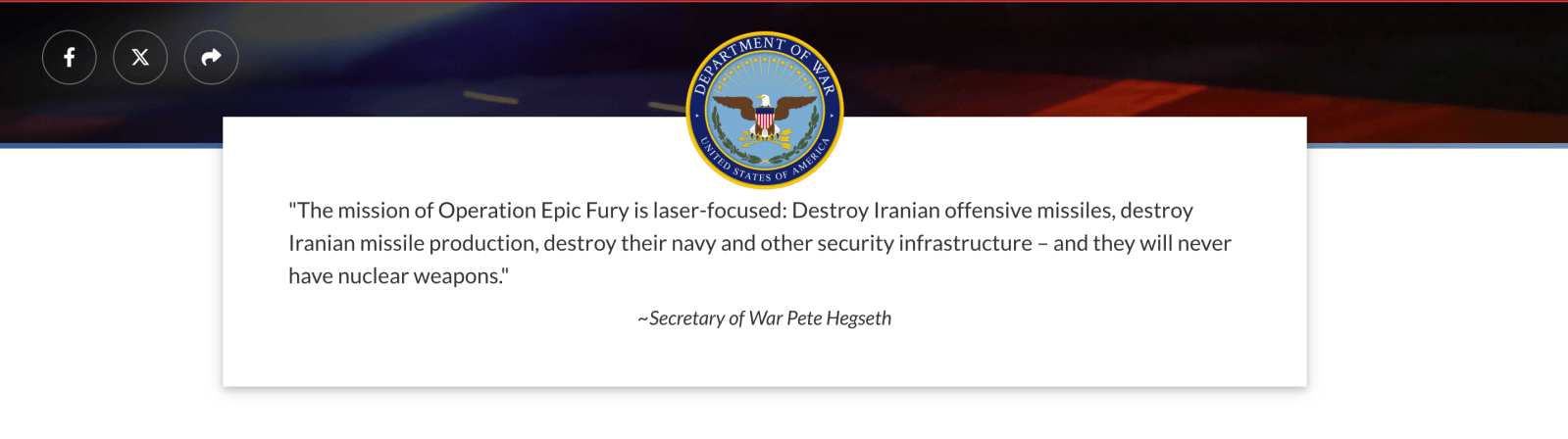

All guns are reloaded on both sides. As geopolitical and military analysts now warn, we are entering the most dangerous phase of the US-Iran confrontation — a fragile ceasefire holding by a thread, no diplomatic resolution in sight, and the resumption of full-scale war a very real possibility.
The Trap Britain Walked Into
History offers a sobering parallel. In August 1914, Britain entered the First World War expecting a short, decisive campaign. Instead, it was dragged into four years of industrial slaughter it never anticipated and could not control. The Battle of Jutland on May 31, 1916 — the war’s defining naval engagement — saw the British Grand Fleet suffer devastating losses: 14 ships sunk, over 6,000 men killed in a single day, and a superpower visibly humiliated on the world stage by the German fleet. Rather than accepting strategic reality, Britain’s wounded pride hardened its resolve to escalate. The war ultimately consumed approximately 750,000 British lives, triggered a generational economic collapse, and marked the irreversible beginning of the end of British global dominance.
America and Israel now face the same fateful choice Britain faced after Jutland: accept the strategic reality and negotiate, or escalate to restore a reputation that may already be beyond saving.
What Actually Happened
This conflict began on February 28, 2026, when the US and Israel launched a combined military operation — later named Operation Epic Fury — striking Iran while nuclear negotiations were still actively underway. On the very first morning of the war, a US Tomahawk missile struck the Shajareh Tayyebeh Elementary School in the town of Minab in southern Iran, killing 168 children and teachers. On the same day, the US and Israel assassinated Iran’s 86-year-old Supreme Leader Ali Khamenei — a man whose lifelong aspiration, by his own repeated declaration, was martyrdom — along with dozens of senior officials who were present at his residence at the time of the strike.
What makes this particularly damning is the diplomatic context in which the war began. Negotiations had been mediated by Oman’s Foreign Minister Badr Al-Busaidi, with UK National Security Adviser Jonathan Powell secretly present in Geneva alongside a technical team from the British Cabinet Office. On February 27 — just one day before the strikes — the Omani mediator publicly declared that a breakthrough had been reached, that Iran had agreed to never stockpile enriched uranium and to full IAEA verification, and that peace was “within reach.” Talks were scheduled to resume on March 2. The bombs fell instead.
This was not the first time America had walked away from a nuclear agreement with Iran. The 2015 Joint Comprehensive Plan of Action — the JCPOA — was a landmark deal between Iran, the United States, the United Kingdom, France, Germany, Russia and China, which placed strict limits on Iran’s nuclear activities in exchange for sanctions relief. It was unilaterally abandoned by the same President Trump during his first term in 2018, dismantling years of multilateral diplomacy and setting in motion the chain of escalation that ultimately led to the war of February 28, 2026.
Iran’s response was swift and consequential. It struck every American military base across the Gulf and, most critically, closed the Strait of Hormuz — the chokepoint that had justified America’s 40-year military presence in the region. In doing so, Iran emerged from the conflict as a proven military superpower in terms of firepower, precision and regional reach — a status it could never have credibly claimed before the war began.
The Scorecard
After 67 days and $25 billion spent, Secretary of State Rubio declared Operation Epic Fury “over,” asserting its objectives had been achieved. Within hours, Trump publicly contradicted his own Secretary of State, warning that bombing could resume “at a much higher level and intensity.” A US Senator said: “There is no coherent strategy to Operation Epic Fury.” The War Powers Resolution — the federal law that requires the President to notify Congress within 48 hours of committing armed forces to hostile action and limits such deployments to 60 days without congressional authorisation — forced Washington to formally notify Congress that hostilities had ended, even as Iranian drones continued targeting Gulf shipping.
A war is won or not decided by comparing what was before and after the outcome. The before-and-after tells a different story.
Before: The Strait of Hormuz was open, carrying 20% of the world’s oil and gas. American military bases across the Gulf were intact. Iran’s Supreme Leader was alive. Oil traded normally. America’s military reputation was unchallenged.
After: The Strait remains effectively closed, with shipping traffic at just 5% of pre-war levels. Every US base in the Gulf was struck. The Supreme Leader was assassinated — and seamlessly replaced by his son Mojtaba Khamenei, a deliberate and calculated choice by Iran’s ruling jurists. It is worth pausing on that choice. Mojtaba lost his father, and members of his immediate family, in the same strike. As James Baldwin wrote in his 1963 work The Fire Next Time: “the most dangerous man in the world is the man who has nothing to lose.” Washington did not just create a new Supreme Leader. It created a man with a personal vendetta, the authority of a theocratic state, and nothing left to fear. The regime remains intact and defiant. Oil has surged to $124 a barrel. Iran’s Foreign Minister is in Beijing consolidating international support.
What was branded Operation Epic Fury has become, by any objective measure, Operation Epic Failure.
Where Things Stand Now
Pakistan is mediating talks between Washington and Tehran, but a resolution remains nowhere in sight. China, heavily dependent on Gulf oil, remains engaged but has refused to pressure Iran while active hostilities persist.
Iran has meanwhile seized cargo vessels, imposed tolls on permitted shipping, and declared that its control of the Strait must be formally recognised even after the conflict ends — a demand Washington cannot publicly accept without explicitly acknowledging strategic defeat.
The second operation — Project Freedom, Trump’s attempt to escort merchant vessels through the closed Strait — was paused within 24 hours of launch, producing what senior analysts described as an “unwelcome frenzy” across Gulf capitals.
CENTCOM has since briefed Trump on next-phase options: limited ground interventions and strikes on Iranian energy infrastructure — which risks shattering the ceasefire and igniting a wider regional war with no defined ceiling.
A further combustible variable remains Yemen. The Houthis, restrained so far, are openly signalling they may restart the Red Sea front. If they do, the world would face the simultaneous blockade of both the Strait of Hormuz and the Bab el-Mandeb — a dual chokepoint crisis that would send the global economy into a shock dwarfing anything seen so far.
The Verdict
America entered this conflict expecting what Britain expected in 1914: a short, decisive, reputation-defining victory. Instead, it has a closed strait, oil at $124, a $25 billion war expense bill, a stalled ceasefire. The United States was not humiliated by a nuclear power or a peer competitor. It was brought to a strategic standstill by a sanctions-crippled nation of 90 million people that Washington had spent years describing as being on the verge of collapse.
That is America’s Jutland. The question now — the only question that matters — is whether Washington learns from Britain’s mistake, or repeats it.